
In today’s digital world, businesses, organizations, and technology systems rely heavily on accurate identification methods to manage data efficiently. One term that often appears in data management, payment processing, telecommunications, and database systems is qmid lookup. While many people encounter this term during technical operations, they may not fully understand what it means, how it works, or why it is important.
A qmid lookup is essentially a process used to retrieve specific information associated with a unique identifier known as a QMID. Depending on the platform or industry, QMID may represent a unique record, account identifier, merchant reference, system ID, or database key that helps locate relevant information quickly and accurately.
As organizations handle millions of records every day, efficient lookup systems become essential. Instead of manually searching through large databases, a qmid lookup allows users and systems to instantly access the information connected to a specific identifier.
This guide explains everything you need to know about qmid lookup, including its purpose, benefits, applications, working process, common uses, challenges, and best practices.
What Is QMID Lookup?
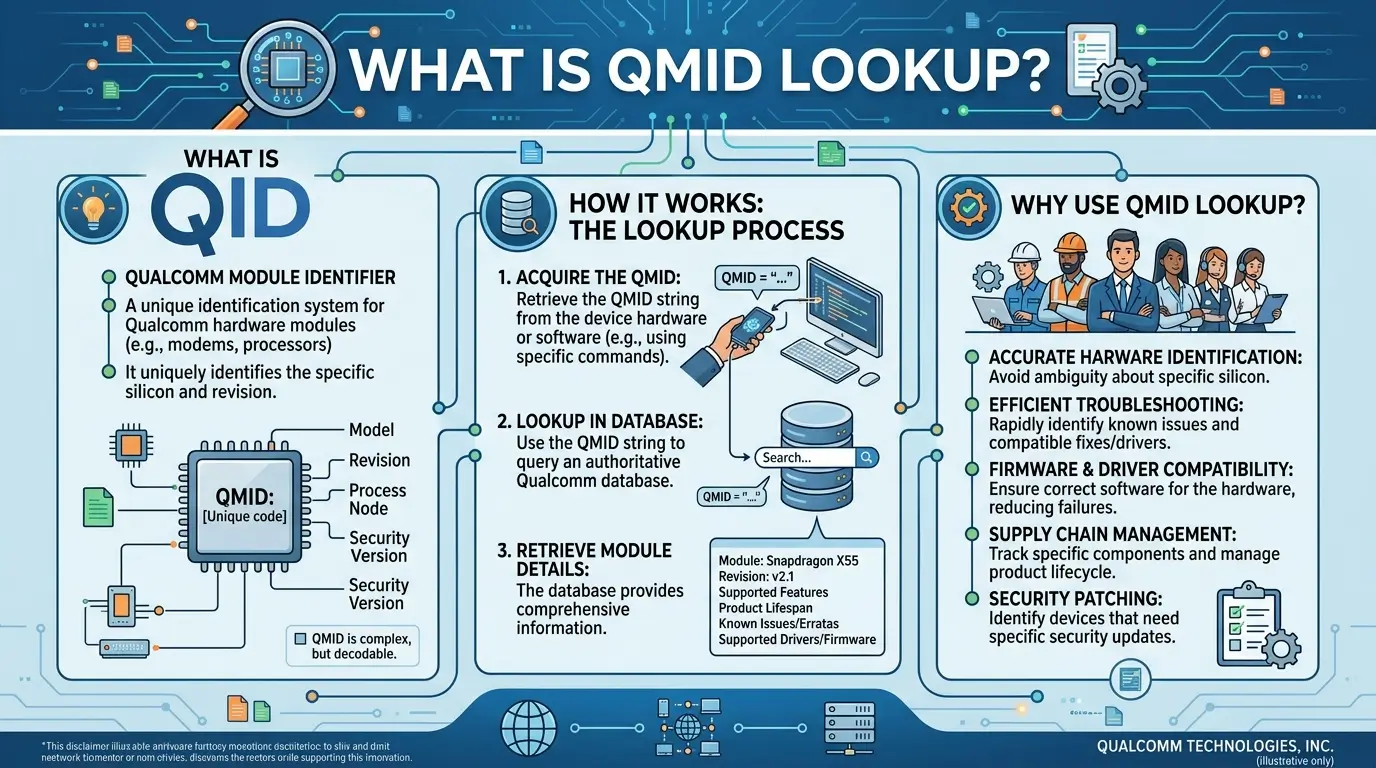
A qmid lookup is a search process that retrieves information associated with a specific QMID. The QMID acts as a unique identifier that points to a particular record or data entry within a system.
Think of it like a library catalog number. Rather than searching through thousands of books manually, you use the catalog number to locate the exact book you need. Similarly, a qmid lookup helps locate a specific record quickly.
The process is commonly used in:
- Database management systems
- Payment processing networks
- Telecommunications systems
- Customer relationship management platforms
- Enterprise software solutions
- Financial services
- Data analytics systems
The primary goal is to improve speed, accuracy, and efficiency when retrieving information.
Why QMID Lookup Is Important
Modern organizations generate enormous amounts of data every day. Managing this information effectively requires reliable identification systems.
A qmid lookup provides several advantages:
Faster Data Retrieval
Instead of scanning large datasets manually, users can access the required information within seconds.
Improved Accuracy
Using a unique identifier reduces the risk of retrieving incorrect records.
Better Data Organization
Records remain structured and easy to locate.
Enhanced Productivity
Employees spend less time searching and more time performing valuable tasks.
Reduced Human Error
Automated lookup processes minimize mistakes caused by manual searches.
How QMID Lookup Works
Although implementations vary between systems, the general process follows a similar structure.
Step 1: Enter the QMID
The user or application submits a QMID value.
Step 2: Query the Database
The system searches its database for a matching identifier.
Step 3: Verify the Match
The database confirms whether the QMID exists.
Step 4: Retrieve Information
Associated records are retrieved from the database.
Step 5: Display Results
The requested information is presented to the user or application.
This entire process often occurs within milliseconds in modern systems.
Common Applications of QMID Lookup
Qmid lookup functionality can be found across multiple industries.
Financial Services
Banks and financial institutions manage millions of transactions daily. Lookup systems help retrieve:
- Account details
- Transaction records
- Merchant information
- Payment histories
- Customer profiles
Fast access to these records improves customer service and operational efficiency.
Telecommunications
Telecommunication companies use unique identifiers to manage:
- Subscriber accounts
- Device information
- Service plans
- Network configurations
A qmid lookup enables support teams to access customer records quickly.
Enterprise Resource Planning
Large organizations rely on ERP systems to manage business operations.
These systems use lookup processes for:
- Employee records
- Inventory management
- Purchase orders
- Vendor information
- Financial transactions
The ability to locate data instantly improves business workflows.
Customer Relationship Management
CRM platforms store extensive customer information.
A qmid lookup helps businesses access:
- Contact details
- Purchase history
- Support tickets
- Communication records
- Customer preferences
This allows organizations to provide personalized services.
E-Commerce Platforms
Online businesses process thousands of transactions daily.
Lookup systems help manage:
- Customer orders
- Product information
- Shipping details
- Payment records
- Inventory data
Fast retrieval improves customer satisfaction and operational efficiency.
Benefits of Using QMID Lookup
Organizations implement qmid lookup systems because they provide numerous advantages.
Increased Efficiency
Employees can retrieve information almost instantly.
Improved Customer Experience
Support teams can resolve issues faster when data is readily available.
Better Decision-Making
Quick access to accurate data supports informed decisions.
Cost Savings
Automated retrieval reduces labor costs associated with manual searches.
Data Consistency
Unique identifiers help maintain reliable and organized records.
Scalability
Lookup systems can handle growing amounts of data without significant performance loss.
Key Features of Effective QMID Lookup Systems
Not all lookup systems are created equal. High-quality solutions typically include several important features.
High-Speed Search
Results should be returned quickly, even with large databases.
Accurate Matching
The system must correctly identify the requested record.
Security Controls
Sensitive data should only be accessible to authorized users.
Real-Time Updates
Records should reflect the latest information.
Error Handling
The system should provide useful messages when a QMID cannot be found.
Integration Capabilities
Modern lookup tools often connect with multiple applications and databases.
Challenges Associated with QMID Lookup
While lookup systems provide significant benefits, organizations may encounter several challenges.
Data Quality Issues
Incorrect or incomplete records can affect lookup accuracy.
Examples
- Duplicate entries
- Missing fields
- Incorrect identifiers
- Outdated information
Maintaining high-quality data is essential.
Security Risks
Unauthorized access to lookup systems can expose sensitive information.
Organizations should implement:
- User authentication
- Access controls
- Encryption
- Activity monitoring
These measures help protect valuable data.
Database Performance
As databases grow larger, lookup speed can decrease.
Performance optimization techniques include:
- Database indexing
- Query optimization
- Server upgrades
- Data archiving
These methods help maintain fast response times.
Integration Complexity
Organizations often use multiple software systems.
Integrating qmid lookup functionality across platforms can require significant planning and technical expertise.
Best Practices for QMID Lookup Implementation
Organizations can maximize effectiveness by following proven best practices.
Use Unique Identifiers
Each QMID should correspond to a single record.
Avoid duplication whenever possible.
Maintain Data Accuracy
Regular audits help ensure records remain accurate and current.
Organizations should:
- Remove duplicate entries
- Correct errors
- Update outdated information
Optimize Database Structure
Well-designed databases improve lookup performance.
This includes:
- Proper indexing
- Efficient table structures
- Optimized queries
Implement Strong Security
Security should remain a top priority.
Recommended measures include:
- Multi-factor authentication
- Role-based access controls
- Data encryption
- Audit logs
Monitor System Performance
Regular monitoring helps identify potential issues before they become major problems.
Key metrics include:
- Query speed
- Database utilization
- Error rates
- System availability
QMID Lookup and Data Management
Effective data management depends heavily on efficient retrieval systems.
Organizations use qmid lookup processes to:
- Organize records
- Improve accessibility
- Maintain consistency
- Support reporting
- Enable analytics
Without reliable lookup functionality, large-scale data management becomes significantly more difficult.
The Role of QMID Lookup in Digital Transformation
Digital transformation initiatives focus on improving efficiency through technology.
A qmid lookup supports these goals by enabling:
Automation
Systems can retrieve information automatically without manual intervention.
Faster Workflows
Employees gain immediate access to required data.
Improved Collaboration
Departments can share information more effectively.
Better Analytics
Accurate records provide a stronger foundation for business intelligence.
Future Trends in QMID Lookup Technology
Technology continues to evolve rapidly, and lookup systems are becoming increasingly sophisticated.
Artificial Intelligence Integration
AI-powered systems can improve search accuracy and predict user needs.
Cloud-Based Solutions
Cloud platforms provide scalable lookup capabilities without requiring extensive infrastructure.
Enhanced Security Technologies
Advanced authentication and encryption methods continue to improve data protection.
Real-Time Data Synchronization
Modern systems update information instantly across connected platforms.
Advanced Analytics
Organizations can gain deeper insights from lookup data and usage patterns.
Common Mistakes to Avoid
Organizations should avoid several common errors when implementing qmid lookup systems.
Ignoring Data Quality
Poor-quality data reduces system effectiveness.
Weak Security Measures
Insufficient protection increases the risk of data breaches.
Lack of Performance Monitoring
Unmonitored systems may experience declining performance over time.
Poor Database Design
Inefficient structures can slow down lookup operations.
Inadequate User Training
Employees should understand how to use lookup tools effectively.
How Businesses Benefit from QMID Lookup
Businesses of all sizes can benefit from implementing efficient lookup systems.
Small Businesses
- Better customer management
- Faster information access
- Improved organization
Medium-Sized Businesses
- Enhanced operational efficiency
- Improved reporting
- Better customer support
Large Enterprises
- Scalable data management
- Enterprise-wide integration
- Advanced analytics capabilities
The ability to retrieve accurate information quickly provides a competitive advantage in nearly every industry.
Frequently Asked Questions
What does qmid lookup mean?
Qmid lookup refers to the process of searching for and retrieving information associated with a unique QMID identifier within a database or system.
Why is qmid lookup important?
It enables fast, accurate, and efficient access to records, improving productivity and reducing errors.
Where is qmid lookup used?
It is commonly used in financial services, telecommunications, enterprise software, customer management systems, and e-commerce platforms.
Can qmid lookup improve customer service?
Yes. Faster access to customer information helps support teams resolve issues more efficiently.
Is qmid lookup secure?
When implemented correctly with authentication, encryption, and access controls, it can be highly secure.
Conclusion
Qmid lookup plays a vital role in modern data management by enabling organizations to locate and retrieve information quickly and accurately. Whether used in financial services, telecommunications, customer management platforms, or enterprise systems, it helps streamline operations, improve productivity, and enhance user experiences.
As businesses continue to generate larger volumes of data, the importance of efficient lookup systems will only increase. By implementing strong security measures, maintaining high-quality data, optimizing database performance, and following best practices, organizations can maximize the value of qmid lookup solutions.
In an increasingly data-driven world, effective qmid lookup functionality is no longer a luxury—it is an essential component of successful information management.