
Planning a pregnancy or simply understanding your menstrual cycle can feel confusing at first. That is where an ovulation calculator becomes helpful. It gives you an estimate of your fertile days and helps you better understand your body’s natural cycle.
Many women use an ovulation calculator to improve their chances of getting pregnant, while others use it to track their menstrual health. Whether your cycle is regular or slightly irregular, learning how ovulation works can make a big difference in reproductive health awareness.
In this detailed guide, you will learn:
- What an ovulation calculator is
- How ovulation works
- How to calculate fertile days
- Signs of ovulation
- Benefits and limitations
- Tips to increase pregnancy chances
- Common myths and mistakes
Let’s explore everything step by step.
What Is an Ovulation Calculator?
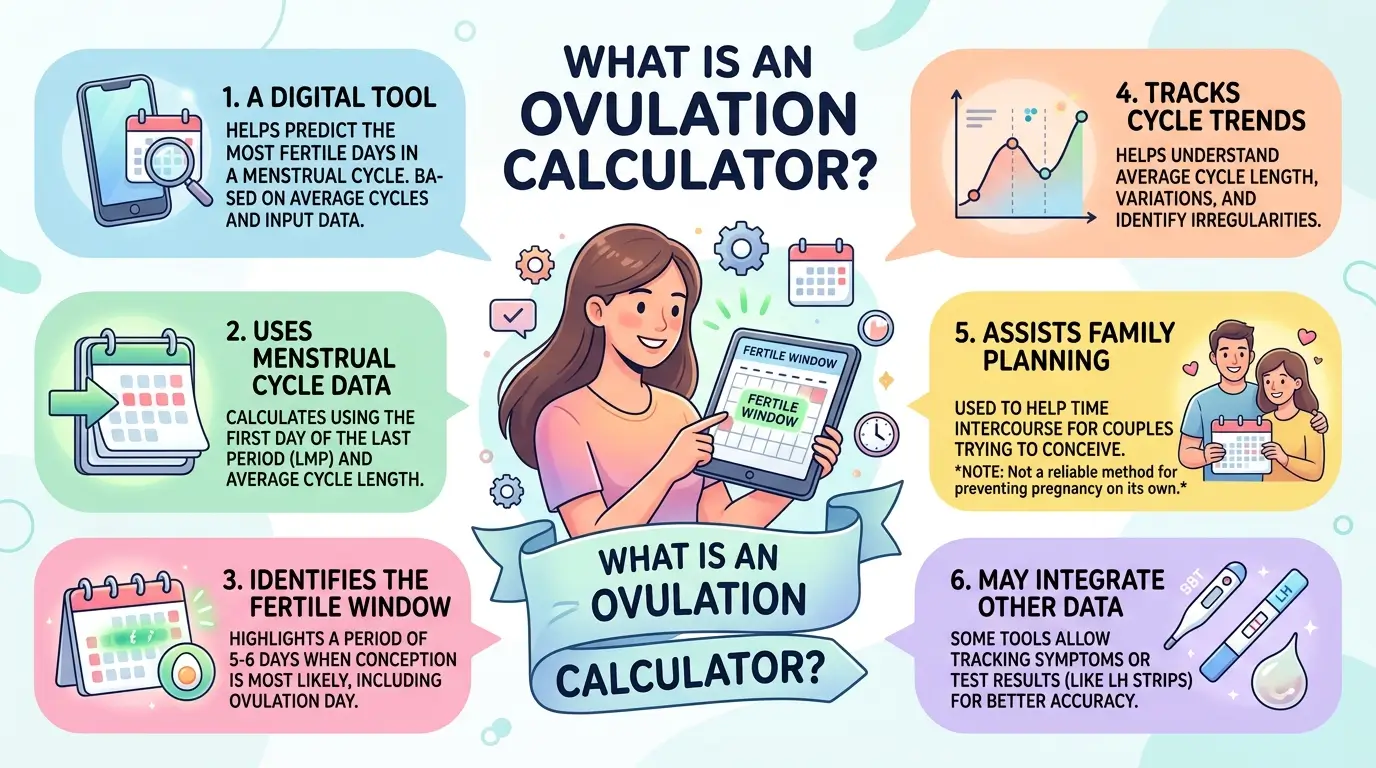
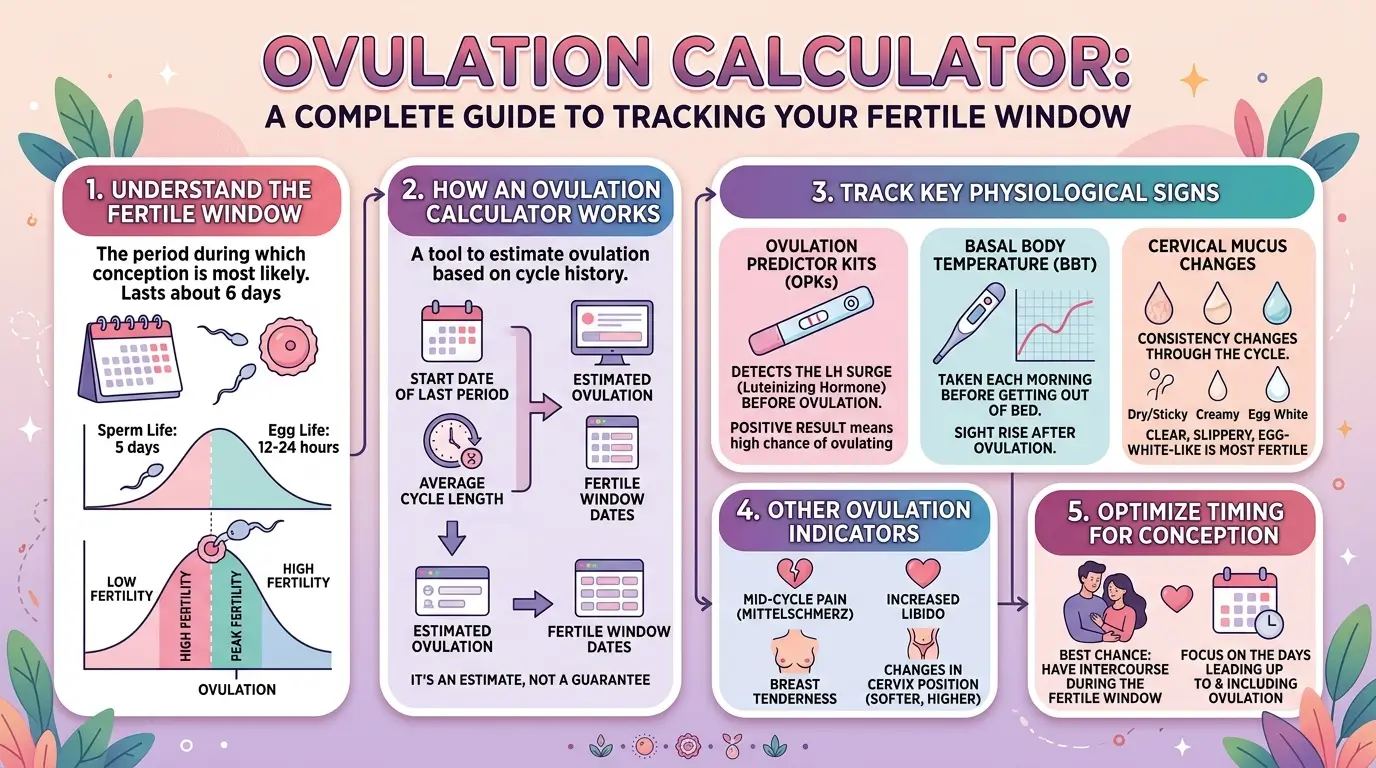
An ovulation calculator is a tool used to estimate the days when a woman is most fertile during her menstrual cycle. These fertile days usually include the day of ovulation and the five days before it.
Ovulation is the process where an ovary releases an egg. Once released, the egg survives for about 12 to 24 hours. Sperm, however, can survive inside the female body for up to five days. This creates a fertile window where pregnancy is most likely to occur.
An ovulation calculator typically asks for:
- The first day of your last period
- Average menstrual cycle length
- Duration of your period
Based on this information, it predicts:
- Ovulation day
- Fertile window
- Expected next period
How Does Ovulation Work?
To understand an ovulation calculator, you first need to understand the menstrual cycle.
The Four Phases of the Menstrual Cycle
1. Menstrual Phase
This is when bleeding occurs. It usually lasts between 3 to 7 days.
2. Follicular Phase
During this phase, hormones help eggs mature inside the ovaries.
3. Ovulation Phase
Ovulation usually occurs around the middle of the cycle. A mature egg is released from the ovary.
4. Luteal Phase
After ovulation, the body prepares for pregnancy. If fertilization does not happen, the next period begins.
When Does Ovulation Usually Happen?
In a typical 28-day cycle, ovulation often happens around day 14. However, not every woman has a 28-day cycle.
Here are some general examples:
| Cycle Length | Approximate Ovulation Day |
|---|---|
| 21 days | Day 7 |
| 24 days | Day 10 |
| 28 days | Day 14 |
| 30 days | Day 16 |
| 35 days | Day 21 |
An ovulation calculator uses these averages to estimate fertile days.
Why Use an Ovulation Calculator?
An ovulation calculator offers several benefits for women trying to understand fertility.
1. Helps Increase Chances of Pregnancy
Knowing your fertile window allows couples to plan intercourse during the most fertile days.
2. Improves Cycle Awareness
Tracking ovulation helps women understand hormonal patterns and cycle regularity.
3. Useful for Family Planning
Some women also use ovulation tracking as part of natural family planning methods.
4. Helps Detect Irregular Cycles
Consistently irregular ovulation may signal hormonal imbalances or reproductive issues.
How to Use an Ovulation Calculator
Using an ovulation calculator is simple. Follow these steps:
Step 1: Track the First Day of Your Last Period
Day one is the first full day of menstrual bleeding.
Step 2: Determine Your Average Cycle Length
Count the number of days from the first day of one period to the first day of the next.
Step 3: Enter the Information
Input your data into the ovulation calculator.
Step 4: Review Your Fertile Window
The calculator estimates your ovulation date and fertile days.
Example of Ovulation Calculation
Suppose:
- First day of last period: May 1
- Cycle length: 28 days
Estimated results:
- Ovulation day: May 14
- Fertile window: May 9 to May 14
Having intercourse during this window increases the chances of conception.
Signs of Ovulation
Although an ovulation calculator provides estimates, your body also gives natural signs of ovulation.
Common Ovulation Symptoms
1. Changes in Cervical Mucus
You may notice clear, stretchy mucus similar to egg whites.
2. Mild Pelvic Pain
Some women experience slight pain on one side of the lower abdomen.
3. Increased Basal Body Temperature
Body temperature rises slightly after ovulation.
4. Increased Libido
Hormonal changes may increase sexual desire.
5. Breast Tenderness
Some women notice mild breast sensitivity.
Combining these signs with an ovulation calculator improves accuracy.
Best Time to Get Pregnant
The best time for pregnancy is during the fertile window.
Most Fertile Days
Research shows the highest pregnancy chances occur:
- 1 to 2 days before ovulation
- On the day of ovulation
Since sperm can survive several days, intercourse before ovulation is often more effective than after ovulation.
Ovulation Calculator for Irregular Periods
Women with irregular cycles may find ovulation prediction more challenging.
Tips for Irregular Cycles
- Track periods for at least 6 months
- Use ovulation predictor kits
- Monitor cervical mucus
- Check basal body temperature
- Consult a healthcare professional if cycles remain unpredictable
An ovulation calculator can still provide estimates, but results may be less precise for irregular cycles.
Ovulation Calculator vs Ovulation Test Kits
Many people wonder whether an ovulation calculator or test kit is better.
Ovulation Calculator
Advantages
- Free and easy to use
- No medical tools needed
- Helpful for cycle awareness
Disadvantages
- Based on estimates
- Less accurate for irregular periods
Ovulation Test Kits
Advantages
- Detect hormone surges directly
- More precise timing
Disadvantages
- Can be expensive
- Requires regular testing
Using both methods together often provides the best results.
Common Factors That Affect Ovulation
Several lifestyle and health factors can impact ovulation timing.
1. Stress
High stress levels may delay ovulation.
2. Weight Changes
Sudden weight gain or loss can disrupt hormone balance.
3. Excessive Exercise
Overtraining may interfere with regular cycles.
4. Hormonal Disorders
Conditions like PCOS can affect ovulation.
5. Poor Sleep
Sleep affects hormone production and reproductive health.
Foods That May Support Ovulation Health
While no food guarantees pregnancy, a balanced diet supports reproductive wellness.
Recommended Foods
- Leafy green vegetables
- Fruits rich in antioxidants
- Whole grains
- Healthy fats
- Lean proteins
- Nuts and seeds
Important Nutrients
Folate
Supports reproductive health.
Iron
Helps maintain healthy ovulation.
Omega-3 Fatty Acids
May support hormone balance.
Vitamin D
Important for fertility and hormonal health.
Lifestyle Tips to Improve Fertility
Using an ovulation calculator works best when combined with healthy habits.
Healthy Fertility Habits
- Maintain a healthy weight
- Stay physically active
- Reduce stress levels
- Avoid smoking
- Limit alcohol intake
- Get enough sleep
- Stay hydrated
Small lifestyle changes can positively affect fertility over time.
Can an Ovulation Calculator Guarantee Pregnancy?
No ovulation calculator can guarantee pregnancy. It only estimates fertile days based on cycle information.
Even healthy couples may take several months to conceive. Fertility depends on many factors including:
- Egg quality
- Sperm health
- Hormonal balance
- Age
- Overall health
Patience and consistent tracking are important.
How Accurate Is an Ovulation Calculator?
An ovulation calculator is reasonably accurate for women with regular cycles.
Accuracy Depends On
- Consistent cycle length
- Correct period tracking
- Hormonal stability
- Overall reproductive health
Women with very regular cycles often receive better predictions than those with unpredictable periods.
Ovulation and Age
Age plays a major role in fertility.
Fertility by Age Group
In Your 20s
Highest fertility levels.
Early 30s
Fertility remains strong but gradually declines.
After 35
Egg quantity and quality decrease more rapidly.
After 40
Pregnancy becomes more challenging for many women.
An ovulation calculator remains useful at any age but cannot overcome age-related fertility decline.
Myths About Ovulation
There are many myths surrounding fertility and ovulation.
Myth 1: Ovulation Always Happens on Day 14
Not true. Ovulation varies based on cycle length.
Myth 2: You Can Get Pregnant Any Day
Pregnancy is most likely during the fertile window.
Myth 3: Regular Periods Mean Perfect Fertility
Regular periods help, but they do not guarantee fertility.
Myth 4: Stress Alone Causes Infertility
Stress may affect cycles, but infertility usually has multiple causes.
Signs You Should See a Doctor
Sometimes fertility concerns require medical evaluation.
Consult a Doctor If
- You have very irregular periods
- Periods stop unexpectedly
- Severe pelvic pain occurs
- You have been trying to conceive for over a year
- You are over 35 and have tried for 6 months without success
Early medical advice can help identify potential problems.
Tracking Ovulation Naturally
Besides using an ovulation calculator, many women prefer natural tracking methods.
Basal Body Temperature Method
Body temperature slightly increases after ovulation.
Cervical Mucus Tracking
Changes in discharge help identify fertile days.
Calendar Method
Tracks cycle patterns over several months.
Fertility Apps
Modern apps combine calendar tracking with symptom monitoring.
Benefits of Understanding Your Fertile Window
Knowing your fertile days offers benefits beyond pregnancy planning.
Advantages Include
- Better reproductive awareness
- Understanding hormonal patterns
- Improved menstrual tracking
- Early detection of irregularities
- More informed healthcare discussions
Women who track ovulation often feel more connected to their overall health.
Common Mistakes When Using an Ovulation Calculator
Avoiding mistakes improves prediction accuracy.
1. Incorrect Cycle Tracking
Always count from the first day of bleeding.
2. Assuming Every Month Is Identical
Ovulation may shift slightly each cycle.
3. Ignoring Body Signals
Physical symptoms can provide important clues.
4. Stressing Over Exact Timing
Fertility is influenced by many factors, not just timing.
Technology and Modern Fertility Tracking
Technology has made fertility tracking easier than ever.
Popular Fertility Tools
- Mobile apps
- Wearable fertility trackers
- Smart thermometers
- Digital ovulation tests
Many modern tools combine multiple data points for better predictions.
Emotional Side of Fertility Tracking
Trying to conceive can sometimes feel emotionally overwhelming.
It is important to:
- Stay patient
- Avoid constant stress
- Communicate openly with your partner
- Focus on overall health
An ovulation calculator is a helpful guide, but emotional well-being matters too.
Frequently Asked Questions
Can I Use an Ovulation Calculator to Avoid Pregnancy?
Some women use fertility awareness methods for birth control, but they are not as reliable as medical contraceptives.
What If My Cycles Change Every Month?
Irregular cycles reduce prediction accuracy. Additional tracking methods may help.
Can Ovulation Happen Twice in One Month?
Typically, ovulation occurs once per cycle.
Is Ovulation Pain Normal?
Mild discomfort during ovulation is common for some women.
Final Thoughts
An ovulation calculator is a useful and simple tool for understanding fertility and menstrual health. Whether you are trying to conceive, tracking your cycle, or learning more about your body, it can provide valuable insights into your fertile window.
While an ovulation calculator is not perfect, it offers a convenient starting point for fertility awareness. Combining it with healthy lifestyle habits, body symptom tracking, and medical guidance when needed can improve your understanding of reproductive health.
Every woman’s body is unique, and cycles can vary naturally. The key is consistency, patience, and awareness. By learning how ovulation works and tracking fertile days accurately, you can make more informed decisions about your reproductive journey.